Feb 11, 2026
If you’ve been apartment hunting in Greensboro, North Carolina, you already know something feels different:
- Apartments you could rent for $1,000 a few years ago are now listed at $1,400–$1,600.
- Affordable units disappear within days.
- Long-time residents are suddenly priced out of neighborhoods they’ve lived in for years.
This isn’t just “market noise.”
It reflects real economic shifts in Greensboro — shifts that affect jobs, housing stability, household budgets, and neighborhood dynamics.
Rent increases don’t happen randomly. They happen when demand, cost structures, regulation, and local economic forces interact in powerful ways. This article pulls together official data, local context, and economic logic so you truly understand why rents are rising, and whether they’re likely to keep rising.
1. Greensboro Population Growth and Demand for Rentals
Greensboro is part of the Greensboro–High Point Metropolitan Statistical Area (MSA), which has been growing steadily for years. Population growth increases housing demand — and when demand rises faster than supply, rents go up.
According to the U.S. Census Bureau:
- Greensboro’s population in 2024 (estimated) was approximately 303,000+, up from about 292,000 in 2020.
- The Greensboro–High Point MSA has consistently grown year over year since 2010. (U.S. Census Bureau)
Population growth feeds rental demand because:
- New residents need housing
- Workforce growth fuels relocation from more expensive metros
- Students, young professionals, and newcomers often rent first
More people competing for the same number of units means landlords can charge more.
2. Housing Supply vs. Demand
The U.S. Department of Housing and Urban Development (HUD) issues quarterly housing market profiles that show Greensboro’s rental market conditions.
According to HUD’s Q4 2024 Housing Market Profile for the Greensboro–High Point MSA:
- Apartment vacancy: ~7.8%
- Apartment average rent (Q4 2024): ~$1,183
- New apartment deliveries in 2024: ~1,525 units
- New apartment deliveries in 2023: ~470 units
- Source: HUD “Greensboro–High Point NC Housing Market Profile” (Nov. 2024)
A vacancy rate below ~8% in a mid-sized market generally signals market pressure rather than slack. Even though more units were completed in 2024 than in 2023, demand outpaced supply, which continues to put pressure on rents.
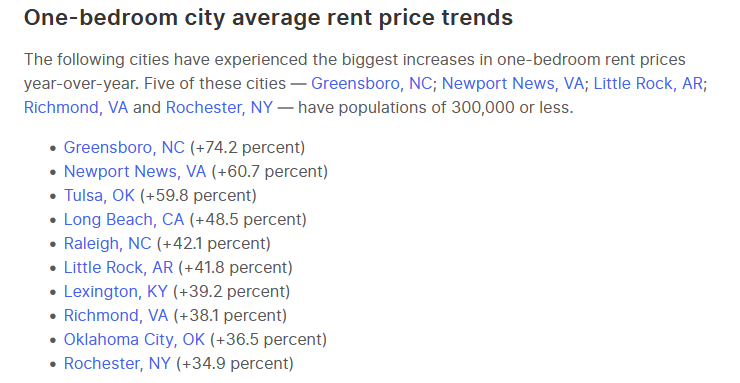
This means that even though construction increased, it hasn’t added enough affordable units at the price points the majority of renters compete for.
3. The Cost of Owning and Operating Rental Housing
Landlords don’t set rent in a vacuum. Their costs have risen:
Property Taxes
Guilford County property taxes have risen over the past several years, adding to landlord operating expenses.
Insurance Costs
Commercial property insurance — especially in the aftershocks of global inflation — has climbed for multi-family landlords.
Maintenance and Labor
Contractors charge more for repairs, and labor shortages increase routine maintenance costs.
Mortgage Costs
Mortgage rates remain higher than historic lows of the 2010s, and when developers finance properties at higher rates, they pass at least part of those costs onto renters.
Landlords have finite flexibility. If their operating costs rise faster than rents, they risk losing money — so they protect margins by increasing rents.
4. Rent Growth Reflects a Regional Pattern — Not Just Greensboro
Greensboro’s rent trends reflect broader Southeast and national patterns:
- Smaller and mid-sized cities (like Greensboro) have absorbed migration from more expensive coastal metros.
- Workers priced out of cities like Atlanta, Charlotte, or DC often choose Greensboro for its cost of living.
This pattern stimulates demand.
However, Greensboro is still cheaper than many big metros, which keeps it competitive but doesn’t put downward pressure on rent.
How Property Taxes in Greensboro Are Calculated (And Why Yours Might Increase)
5. Homeownership Barriers Keep People Renting Longer
Many people want to buy a home, but rising home prices and mortgage costs make buying difficult:
- Average home prices in Greensboro have increased in recent years.
- Mortgage interest rates are higher than the record lows of the past decade.
When renting remains significantly cheaper than buying, more households elect to rent — or stay renters longer — increasing rental demand.
This is a structural trend, not a temporary blip.
6. Will Rent Continue to Rise in Greensboro?
Based on the patterns above, here is what the data suggests:
Likely to Continue Slowly Rising If:
- Population growth remains steady
- New construction doesn’t add enough “affordable” units
- Landlord costs (taxes/insurance/maintenance) continue rising
More Likely to Stabilize If:
- Housing policy encourages affordable rentals
- New developments focus on lower price tiers
- Homeownership becomes more attainable
Questions People Often Ask
1. Why is rent so high in Greensboro right now?
Because housing demand has increased faster than affordable supply, landlord operation costs have risen, and population growth continues to put pressure on existing units.
2. Is Greensboro rent going up or down?
Recent data shows rent is growing, but at a modest pace relative to personal income and inflation — not skyrocketing like some coastal metros.
3. How much is the average rent in Greensboro?
Recent nonprofit and government data suggest the typical apartment rent is roughly $1,100–$1,400, depending on the source and unit size.
4. Why can’t more apartments solve the rent problem?
New apartments are being built, but many are priced at mid-to-high levels, leaving affordable units scarce for lower-income renters.
5. Does Greensboro have rent control?
No — North Carolina does not allow local rent control policies. Rents are determined by supply/demand and operating costs.
6. Are rental vacancies high or low in Greensboro?
Vacancy is steady but not high enough to reduce pressure on rent prices.
7. Does living outside Greensboro help lower rent?
Suburbs or nearby towns can have lower rents, but commuting costs and lifestyle trade-offs matter.
8. Will rent eventually drop in Greensboro?
A significant drop would require oversupply (much higher new construction) or decreased demand — neither is currently evident.
9. Should I buy instead of rent in Greensboro?
That depends on your finances. Buying builds equity but requires a stable income, a down payment, and a mortgage qualification. Renting offers flexibility but no ownership.
10. Are students driving up rent in Greensboro?
Students contribute — particularly to demand in neighborhoods near colleges — but they are only one part of a larger market with working adults, families, and relocating households.
Connect With Us