
Updated: Feb 15, 2026
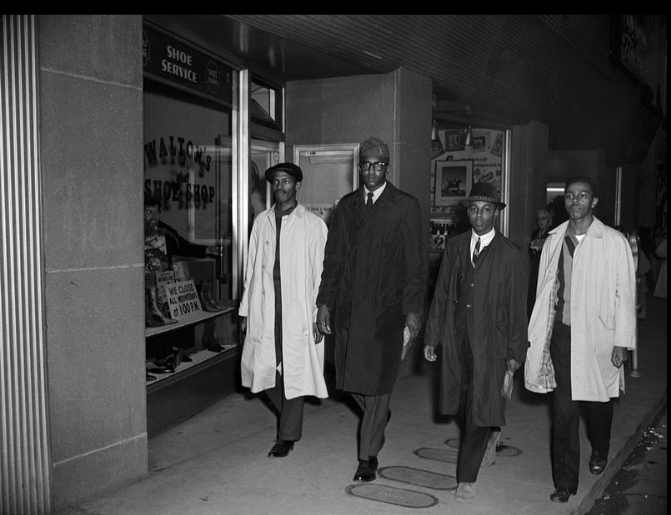
On February 1, 1960, four Black college freshmen quietly sat down at a whites-only lunch counter in downtown Greensboro, North Carolina — and refused to leave.
They did not shout.
They did not fight.
They did not break anything.
They simply sat.
By the end of that week, hundreds had joined them. Within months, the protest model they used had spread to more than 50 cities across the South.
So why did the Greensboro sit-in happen—and why did it begin there?
This is the full story, based on documented historical records from the Library of Congress, SNCC Digital Gateway, NCpedia, and the Smithsonian National Museum of American History.
Quick Answer: Why Did the Greensboro Sit-In Happen?
The Greensboro sit-in happened because four students from North Carolina A&T State University deliberately challenged racial segregation at a Woolworth’s lunch counter, using nonviolent direct action to protest the denial of equal service to Black customers.
They were protesting Jim Crow laws that allowed businesses to serve Black customers in stores — but refused to serve them at lunch counters.
Their action was carefully planned, influenced by nonviolent resistance principles, and designed to expose segregation to national media attention.
(Source: SNCC Digital Gateway; Library of Congress; NCpedia)
The Conditions That Made the Sit-In Inevitable
To understand why it happened, you have to understand the environment of Greensboro in 1960.
1. Legal Segregation Under Jim Crow
Although the Supreme Court had ruled school segregation unconstitutional in Brown v. Board of Education (1954), segregation in public accommodations remained widespread throughout the South.
In Greensboro:
- Black customers could shop at downtown stores.
- But they were denied service at lunch counters inside those same stores.
- Signs reading “Whites Only” were common at seating areas.
(Source: SNCC Digital Gateway)
This contradiction — allowed to spend money, but not allowed to sit — created deep frustration.
Why Greensboro? Why Woolworth’s?
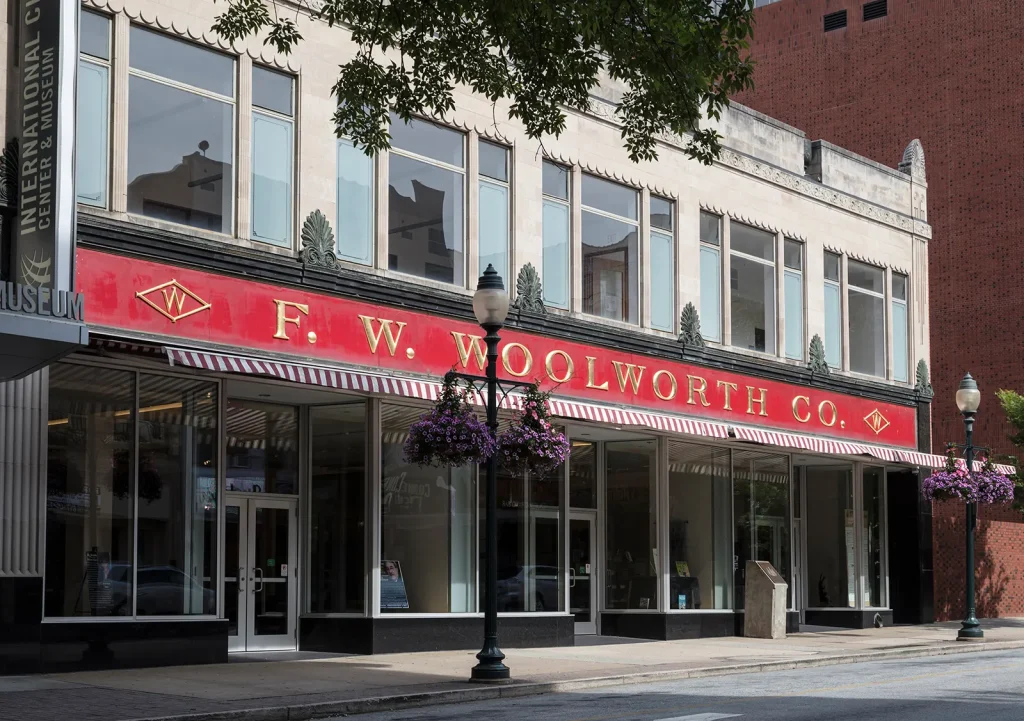
The protest began at the F.W. Woolworth store located at 132 South Elm Street in downtown Greensboro.
Why Woolworth’s?
- It was a national chain.
- It served Black customers in retail.
- But it refused lunch counter service to Black patrons.
- It was highly visible in downtown Greensboro.
Targeting a national chain increased the chances of media attention and corporate pressure.
(Source: Smithsonian National Museum of American History; NCpedia)
Who Started It?
The four students were:
- Ezell Blair Jr. (later Jibreel Khazan)
- Franklin McCain
- Joseph McNeil
- David Richmond
All were freshmen at North Carolina A&T State University.
Contrary to myth, this was not spontaneous.
They had discussed action repeatedly in dorm rooms. They studied nonviolent resistance strategies influenced by Gandhi and earlier civil rights actions.
On January 31, 1960, they finalized their plan.
The next day, February 1, they acted.
(Source: SNCC Digital Gateway; NCpedia)
What Happened on February 1, 1960?
At approximately 4:30 p.m., the four students:
- Purchased small items inside Woolworth’s.
- Sat at the lunch counter.
- Politely asked for coffee.
They were refused service.
They remained seated until the store closed.
Police were present, but no arrests were made because the store manager declined to press trespassing charges.
(Source: NCpedia; Library of Congress)
The Protest Grows Rapidly
Day 2: Approximately 25 students joined.
Day 3: Around 60 students participated.
By February 6: Estimates reached 1,400 participants in downtown demonstrations.
The movement quickly spread to:
- Winston-Salem
- Durham
- Charlotte
- Nashville
- Richmond
- And more than 50 cities across the South by April 1960
(Source: Library of Congress; SNCC Digital Gateway)
The Greensboro action inspired the formation of the Student Nonviolent Coordinating Committee (SNCC) later that year — a major civil rights organization.
Did the Sit-In Work?
Yes — but not immediately.
The Greensboro Woolworth lunch counter was officially desegregated on July 25, 1960, nearly six months after the protest began.
Four Black employees quietly sat down and were served without public announcement — ending segregation at that counter.
(Source: Smithsonian; NCpedia)
More broadly, the sit-in movement:
- Accelerated desegregation across Southern cities.
- Strengthened youth involvement in the civil rights movement.
- Demonstrated the power of nonviolent direct action.
- Increased national media focus on racial inequality.
Why It Spread So Quickly
The Greensboro sit-in succeeded because:
- It was peaceful.
- It was disciplined.
- It exposed injustice publicly.
- It was easy to replicate in other cities.
Lunch counters existed across the South.
The model could be copied anywhere.
Within months, thousands of students were participating in similar protests.
(Source: SNCC Digital Gateway; Library of Congress)
What Stands There Today?
The original Woolworth building now houses the International Civil Rights Center & Museum in Greensboro.
A portion of the original lunch counter is preserved at the Smithsonian National Museum of American History in Washington, D.C.
(Source: Smithsonian; sitinmovement.org)
Myths vs. Facts
Myth: The sit-in was spontaneous.
Fact: It was carefully planned by students who studied nonviolent strategy.
Myth: They were arrested immediately.
Fact: Police did not arrest them on Day 1 because management did not press charges.
Myth: It ended segregation overnight.
Fact: It took nearly six months of sustained protest before the counter was integrated.
10 Frequently Asked Questions About the Greensboro Sit-In
1. Why did the Greensboro sit-in start?
It began as a protest against racial segregation at lunch counters that refused service to Black customers.
2. Who were the Greensboro Four?
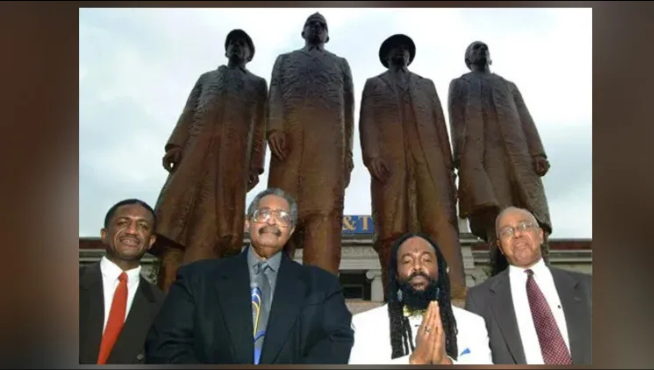
Ezell Blair Jr., Franklin McCain, Joseph McNeil, and David Richmond — freshmen at NC A&T.
3. What date did the sit-in begin?
February 1, 1960.
4. Where did it happen?
At the F.W. Woolworth store on South Elm Street in downtown Greensboro.
5. Was it violent?
No. It was a peaceful, nonviolent protest.
6. How long did it take for Woolworth’s to desegregate?
Until July 25, 1960.
7. Did it inspire other protests?
Yes. Sit-ins spread to more than 50 Southern cities.
8. What organization formed because of the sit-ins?
The Student Nonviolent Coordinating Committee (SNCC).
9. Is the building still standing?
Yes, it is now the International Civil Rights Center & Museum.
10. Why is the Greensboro sit-in historically significant?
It marked a turning point in youth-led civil rights activism and demonstrated the power of disciplined nonviolent protest.
Why This Still Matters Today
The Greensboro sit-in was not just about coffee.
It was about citizenship, dignity, and the power of organized, peaceful resistance.
It showed that:
- Local action can spark national change.
- Youth movements can reshape history.
- Discipline can be stronger than confrontation.
And it began in Greensboro.
Connect With Us