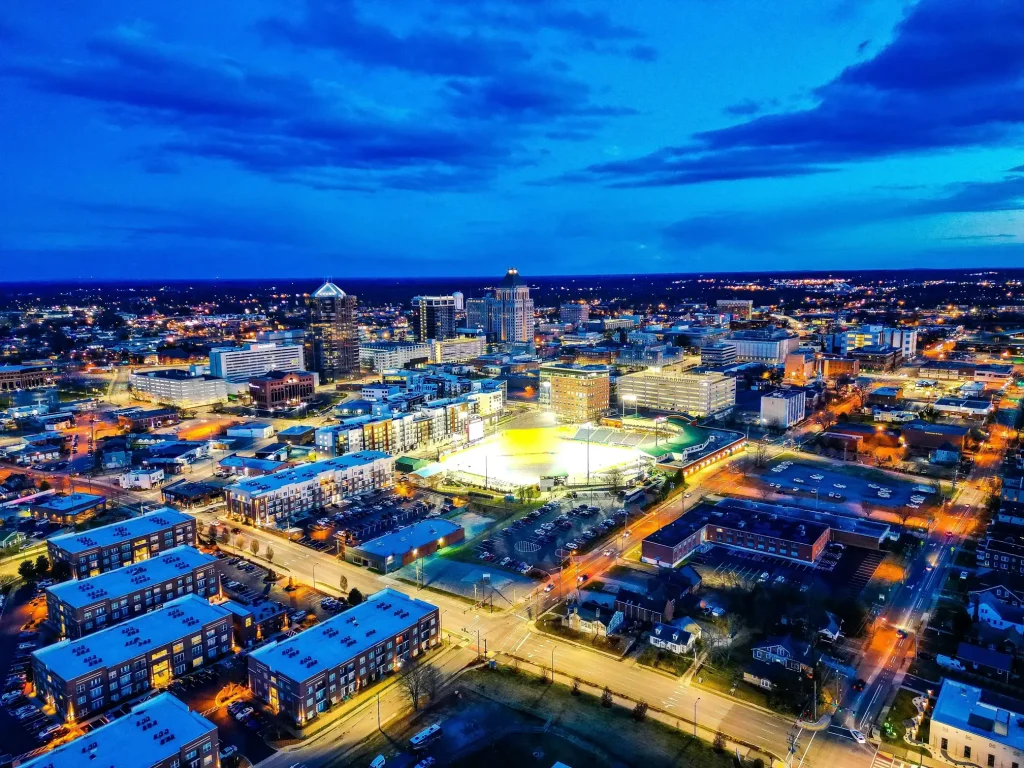
If it feels like Greensboro is growing fast, you’re not imagining it. More people are looking at Greensboro, North Carolina as a place where you can still get breathing room—financially, emotionally, and lifestyle-wise—without giving up the basics that make a city feel alive.
But “people are moving here” is a big claim. So let’s explain it with the exact factors involved: population trends, cost of living, housing, jobs, safety, and quality of life.
The short answer (the real reason people are moving)
People are moving to Greensboro in 2026 because it hits a sweet spot:
- A growing metro population
- Housing that’s still more affordable than many major metros
- A steady job market with major investments tied to the airport and manufacturing
- A central location in the Triad with access to Raleigh/Durham and Charlotte
- A lifestyle that’s calmer than big-city North Carolina—without being isolated
Now let’s break those down one by one.
1) Population trends: Greensboro is growing—and so is the metro city
The U.S. Census Bureau shows Greensboro’s population rising from 269,666 (2010) to 299,035 (2020).
That’s a meaningful jump over a decade—especially for a city that isn’t marketed like Raleigh or Charlotte.
The Census Bureau’s estimate for Greensboro in July 2024 is 307,381.
That’s growth beyond the 2020 baseline, and it supports what locals see: more housing pressure, more traffic in growth corridors, and more development conversations.
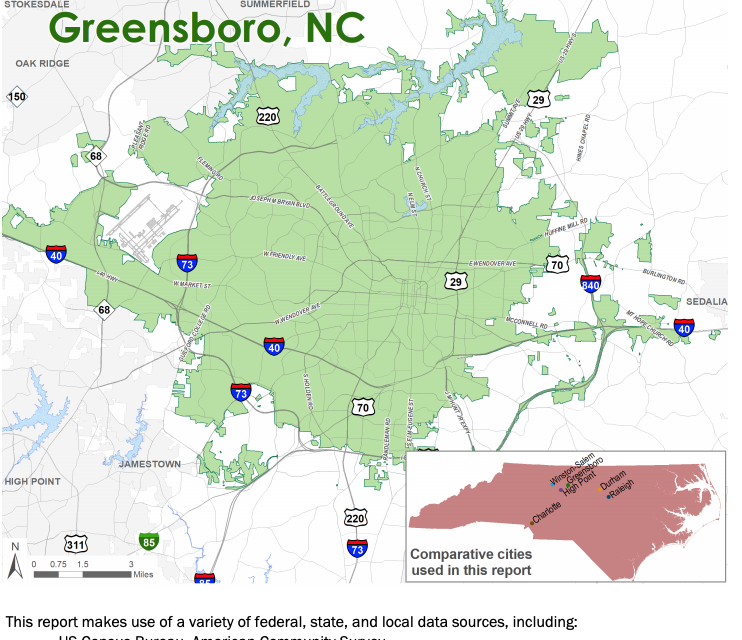
A lot of “Greensboro growth” is regional: people move across city lines into adjacent areas while still living in the Greensboro economy.
The Greensboro–High Point metro area population is estimated at 800,722 (2024).
That scale matters because it shapes:
- job availability,
- housing demand,
- rent pricing,
- infrastructure strain,
- and business investment decisions.
Quick population snapshot table
| Area | Data point | What it suggests |
|---|---|---|
| Greensboro city | 299,035 (2020 Census) | Solid baseline city size (Census.gov) |
| Greensboro city | 307,381 (July 2024 estimate) | Continued post-2020 growth (Census.gov) |
| Greensboro–High Point MSA | 800,722 (2024) | Bigger regional pull than people realize (FRED) |
2) Cost of living: Greensboro still feels “doable” compared to other places
This is one of the biggest reasons relocation searches spike.
Even with rising rent and home prices, Greensboro still tends to come in below the national cost curve. Apartment List estimates the cost of living in Greensboro is 15.8% cheaper than the U.S. average.
That gap is exactly what attracts:
- families priced out of bigger metros,
- remote workers trying to reduce overhead,
- and locals from higher-cost NC markets (especially the Triangle).
What “affordable” looks like in real monthly life
The Census QuickFacts data (ACS 2020–2024) gives a reality check for housing-related costs in Greensboro city:
- Median gross rent: $1,172
- Median monthly owner cost (with mortgage): $1,447
- Median value of owner-occupied housing units: $244,800
Those numbers are one reason Greensboro stays on people’s shortlists: many households can still find a path to stability here that feels harder elsewhere.
3) Housing market: prices are higher than “old Greensboro,” but still competitive
Housing is the strongest push-pull factor: it’s why people move, and it’s also what makes locals feel the city “changing.”
Redfin’s January 2026 housing market page shows:
- Median sale price: $275,000
- Year-over-year change: -3.5% (down slightly vs last year)
- Homes selling in about 53 days on average
That “slightly down” signal matters because it suggests the market is cooling compared to peak frenzy years—giving buyers more breathing room than they had recently.
Rent: still below the national average, but not “cheap”
Zillow’s rent market trends for Greensboro show:
- Average rent: about $1,500
- Zillow notes this is ~24.81% lower than the national average
Quick housing + rent
| Metric | Greensboro value | Source |
|---|---|---|
| Median home sale price (Jan 2026) | $275,000 | Redfin (Redfin) |
| Median gross rent (ACS 2020–2024) | $1,172 | Census QuickFacts (Census.gov) |
| Avg rent (recent Zillow market trends) | ~$1,500 | Zillow (Zillow) |
4) Job market and growth: Greensboro is building a stronger “why move here” story
People don’t relocate just for cheaper rent. They relocate for stability and opportunity.
The unemployment signal
The Greensboro–High Point MSA unemployment rate was 4.3% in November 2025, according to FRED (Federal Reserve Economic Data).
That’s not a “boom town” number, but it is a realistic indicator of a labor market that continues to function.
Major investment headlines that shape growth expectations
One reason Greensboro shows up in relocation searches is that the region keeps landing major investment announcements—especially tied to manufacturing, logistics, and aerospace near PTI.
The JetZero announcement is a huge example: AP reported plans for a $4.7B plant at Piedmont Triad International Airport with projections of 14,500 jobs by 2036 (long-term target).
Reuters also covered the scale and timeline of this investment.
Separately, Hoffman & Hoffman’s expansion in Greensboro involves $40M investment and 131 jobs in Guilford County, covered by local news.
These projects don’t mean everyone is getting high-paying jobs tomorrow. But they do change the long-range confidence story for people deciding where to place their family and career.
5) Pros and cons of moving to Greensboro:
Pros
Greensboro is attractive because:
- housing is still comparatively accessible (especially versus major metros),
- the metro population and job base are growing,
- major investment announcements add long-term confidence,
- and daily life feels less “expensive pressure” than many places.
Cons
Greensboro can frustrate newcomers because:
- wage growth doesn’t always match housing cost growth,
- neighborhood choice matters a lot,
- and some people expect big-city entertainment density that Greensboro doesn’t aim for.
FAQs
Are people really moving to Greensboro?
Yes—both the city and metro show continued growth, with Greensboro city estimated at 307,381 in 2024 and the Greensboro–High Point metro at 800,722 in 2024.
Is Greensboro still affordable in 2026?
Compared to many U.S. cities, yes. Apartment List estimates Greensboro’s cost of living is 15.8% cheaper than the national average, though rent and home prices have risen compared to “old Greensboro.”
What do homes cost in Greensboro right now?
Redfin reports a median sale price of $275,000 in January 2026, with prices slightly down year-over-year.
What’s the average rent in Greensboro?
Zillow’s market trends show an average rent around $1,500, and notes that Greensboro is below the national average for rent.
Is Greensboro getting more jobs?
The region has major long-range investments (like JetZero’s planned facility and job targets) and ongoing expansions from companies operating in Guilford County.
Connect With Us